

Why Values Matter in a World Searching for Hope
A Christian values list provides essential guidance for believers seeking to live according to God’s design in a world that often promotes opposing principles. As depression and suicide continue to impact individuals and families across the U.S., many people are searching for lasting hope beyond what culture can offer.
Core Christian Values:
- Love – Sacrificial care for God and others (1 John 4:19)
- Humility – Putting others before self (Philippians 2:3)
- Forgiveness – Releasing bitterness and extending grace (Colossians 3:13)
- Integrity – Truthfulness and moral consistency (Proverbs 12:22)
- Generosity – Sharing resources and talents freely (Acts 20:35)
- Faithfulness – Trust and loyalty through all circumstances (Matthew 6:33)
- Kindness – Compassion demonstrated through actions (Ephesians 4:32)
- Peace – Inner tranquility and conflict resolution (Colossians 3:15)
- Courage – Boldness to stand for truth (Joshua 1:9)
- Hope – Confident expectation in God’s promises (Hebrews 10:23)
- Respect – Honoring others as image-bearers of God (1 Peter 2:17)
- Justice – Advocating for the vulnerable and oppressed (Micah 6:8)
These values stem from biblical foundations, including the Ten Commandments, Jesus’ teachings in the Sermon on the Mount, and the Fruit of the Spirit outlined in Galatians 5:22-23. Unlike many cultural value systems that prioritize self, status, or success, Christian values center on loving God and serving others.
Christian values endure because they’re rooted in God’s unchanging character revealed in Scripture, not in shifting cultural trends. They provide a moral compass that leads to the abundant life Jesus promised in John 10:10, contrasting sharply with secular approaches that often leave people feeling empty despite material success.
I’m Jeff Bogue, and I’ve seen how a clear Christian values list helps believers move from good intentions to consistent Christlike character.
The Bedrock of Belief: Where Do Christian Values Come From?
Have you ever wondered why Christian values feel so different from what the world promotes? It’s because they don’t come from human thinking or whatever happens to be popular at the moment. Christian values flow directly from God’s unchanging character, revealed to us through Scripture over thousands of years.
Think of it like a family tree. The biblical foundations for our values stretch from the Old Testament all the way through the New Testament, creating one beautiful, complete picture of how God wants us to live.
A practical Christian values list is rooted in Scripture, starting with the Ten Commandments. These weren’t just a bunch of rules to make life difficult; they were actually God showing us His heart. Each commandment reflects something about God’s holy nature and shows us how to live in right relationship with Him and the people around us.
But then Jesus came and changed everything. In the Sermon on the Mount, Jesus took those foundational principles and showed us what they really meant. He revealed that true righteousness isn’t about checking boxes or following rules perfectly—it’s about heart change from the inside out.
The apostolic teachings, especially Paul’s letters, help us understand this even better. Paul made it crystal clear that we can’t manufacture Christian values through sheer willpower or good intentions. They come through the Holy Spirit’s work in our lives. As we explore in our discipleship resources, real spiritual growth happens when we let God’s Word transform us from the inside out.
The Two Greatest Commandments
When someone asked Jesus which commandment was most important, He didn’t have to think about it. In Matthew 22:36-40, Jesus said: “Love the Lord your God with all your heart, soul, and mind. This is the first and greatest commandment. And the second is like it: Love your neighbor as yourself.”
These two commandments are like the foundation of a house—everything else gets built on top of them. Every single Christian value flows from this dual love: vertical love toward God and horizontal love toward others. And this isn’t just warm, fuzzy feelings—it’s active, sacrificial commitment that puts relationship over rules.
I’ve watched this principle transform countless young leaders in our ministry. When they finally grasp that Christianity is fundamentally about relationship rather than religious performance, something clicks. They start living out values not because they have to, but because they genuinely love God and want to love others well.
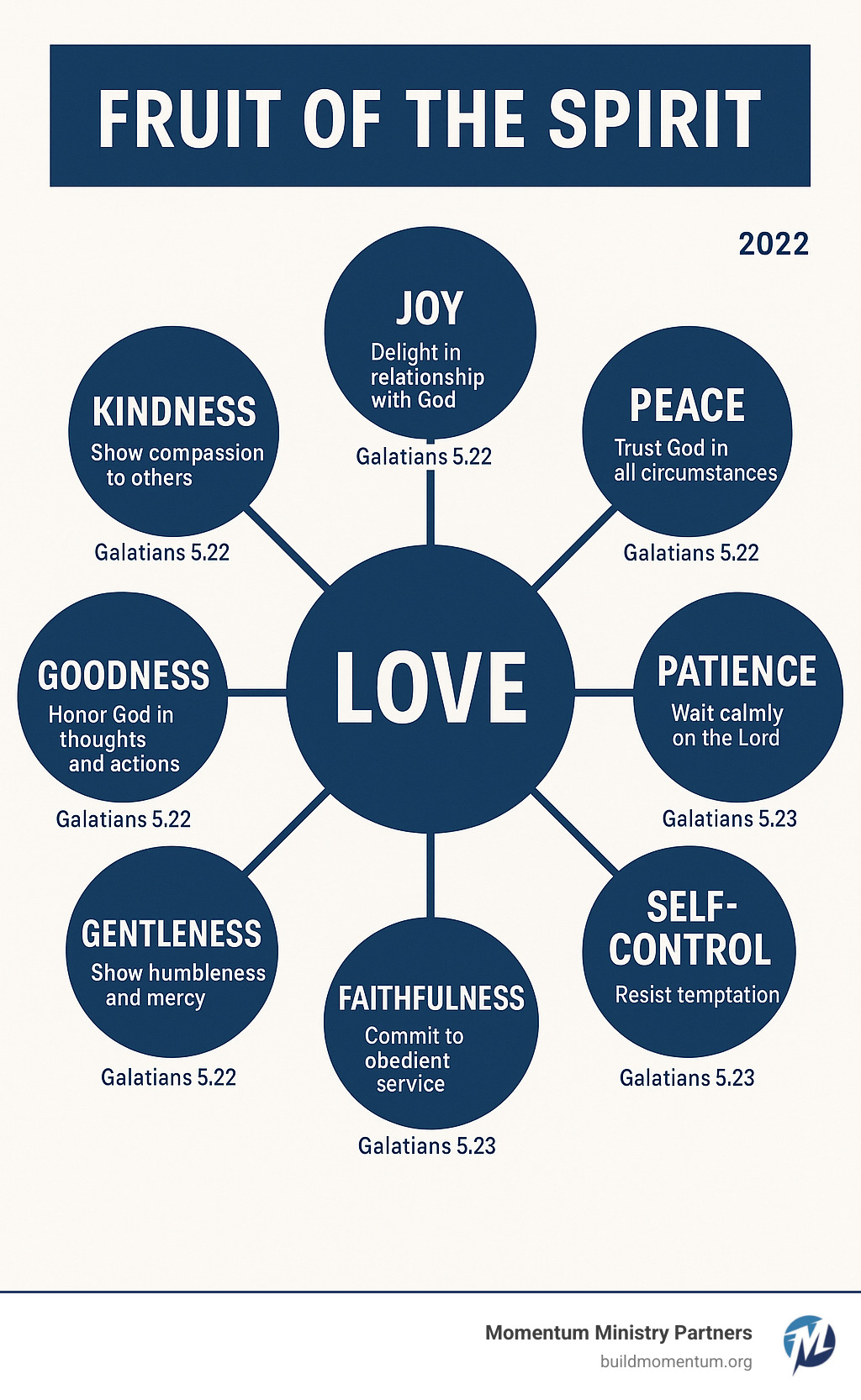
The Fruit of the Spirit
Galatians 5:22-23 gives us perhaps the clearest Christian values list in all of Scripture: “But the fruit of the Spirit is love, joy, peace, forbearance, kindness, goodness, faithfulness, gentleness and self-control.” As GotQuestions.org notes, these aren’t things we achieve through hard work—they’re evidence that the Holy Spirit is actually working in our lives.
Here’s what I love about the Fruit of the Spirit: it represents character change, not behavior modification. When we’re truly connected to Christ, these qualities naturally start showing up in our lives. It’s like an apple tree producing apples—the tree doesn’t strain and struggle to create fruit; it just grows naturally from healthy roots.
This connects directly to how we approach ministry at Momentum Ministry Partners. In putting faith into action, we don’t just teach young people what to do—we help them understand who they are in Christ. When they get that, godly actions flow from transformed hearts rather than guilt or obligation.
The Ultimate Christian Values List: 12 Principles That Define a Follower of Christ

After decades of ministry, I’ve learned that a good Christian values list is practical, not theoretical. Below is a practical Christian values list of twelve traits every believer can cultivate. They flow from Christ-like character and grow as the Holy Spirit works in us, guiding our choices at home, school, work, and church.
1. Love (Agape)
Agape love is sacrificial, putting others’ good above our own (1 John 4:19). It shows up as compassion, empathy, and grace—whether mentoring a child, serving in a soup kitchen, or praying for an enemy. This value motivates everything else on the list.
2. Humility
Humility isn’t self-loathing; it’s seeing ourselves and others through God’s eyes (Philippians 2:3). Like Jesus, we choose servanthood over self-promotion, stay teachable, and celebrate the success of others.
3. Forgiveness
Colossians 3:13 calls us to forgive as Christ forgave us. Forgiveness releases the right to revenge, breaks bitterness, and opens the door to healing. It may take time, but it always sets the forgiver free.
4. Integrity & Honesty
Integrity means our private life matches our public words (Proverbs 12:22). We keep promises, admit failure, and tell the truth even when it costs us. Consistent honesty builds lasting trust.
5. Generosity & Stewardship
Everything belongs to God, so we gladly share time, talents, and treasure (Acts 20:35). Whether writing a tithe check, volunteering, or mentoring, we use His gifts for Kingdom purposes and manage resources wisely.
6. Faithfulness & Perseverance
Faithfulness is steady loyalty to God and people (Matthew 6:33). Perseverance adds endurance, trusting God’s promises when results are unseen (Hebrews 11:1). Long-term impact comes from daily, patient obedience.
7. Kindness & Goodness
Kindness shows practical care; goodness goes further, looking for ways to bless (Ephesians 4:32). Simple acts—a note, a meal, a listening ear—become a megaphone for the Gospel in a cynical world.
8. Peace & Self-Control
Christ’s peace rules our hearts (Colossians 3:15), making us calm, constructive peacemakers. Self-control (Galatians 5:22-23) is Spirit-empowered discipline over words, emotions, and habits, sparing us many avoidable wounds.
9. Courage
Biblical courage is acting despite fear (Joshua 1:9). It shares the Gospel, stands for truth, and takes Spirit-led risks. God uses willingness more than ability—so we step out and watch Him supply strength.
10. Hope
Hope is confident expectation anchored in God’s faithfulness (Hebrews 10:23). It reframes trials with an eternal perspective (John 10:10) and turns believers into steady encouragers for a hurting world.
11. Respect
Every person bears God’s image, so we honor all (1 Peter 2:17). Respect listens before speaking, treats the janitor like the CEO, and engages disagreement with grace—essential for reconciliation and witness.
12. Justice
Micah 6:8 says to act justly, love mercy, and walk humbly. Justice defends the vulnerable, promotes fairness, and opposes corruption. Justice is not partisan posturing; it’s living out God’s righteous heart in practical ways.
Frequently Asked Questions about Christian Values
How are Christian values different from simply “being a good person”?
Motivation. Christians act from a heart changed by Jesus and empowered by the Holy Spirit, not from self-improvement. The standard is God’s unchanging Word, not shifting culture, and grace covers our shortfalls.
Can I live out these values if I’m new to faith?
Yes. Growth is a lifelong journey. Stay in Scripture, pray, join a church community, and celebrate small steps. Progress, not perfection, marks authentic discipleship.
Conclusion: A Life Marked by More Than a List
These twelve values aren’t a checklist; they’re fruit that grows when we stay rooted in Christ. Momentum Ministry Partners exists to help believers of all ages cultivate them through conferences, mentoring, and resources across the United States.
Want your students to see this Christian values list move from words to lived-out faith? Register your group for Momentum Youth Conference 2026 (July 14–19) and give them a week of worship, teaching, and hands-on ministry built to spark lasting spiritual momentum.






0 Comments