

Why Understanding TikTok’s Impact Matters Now
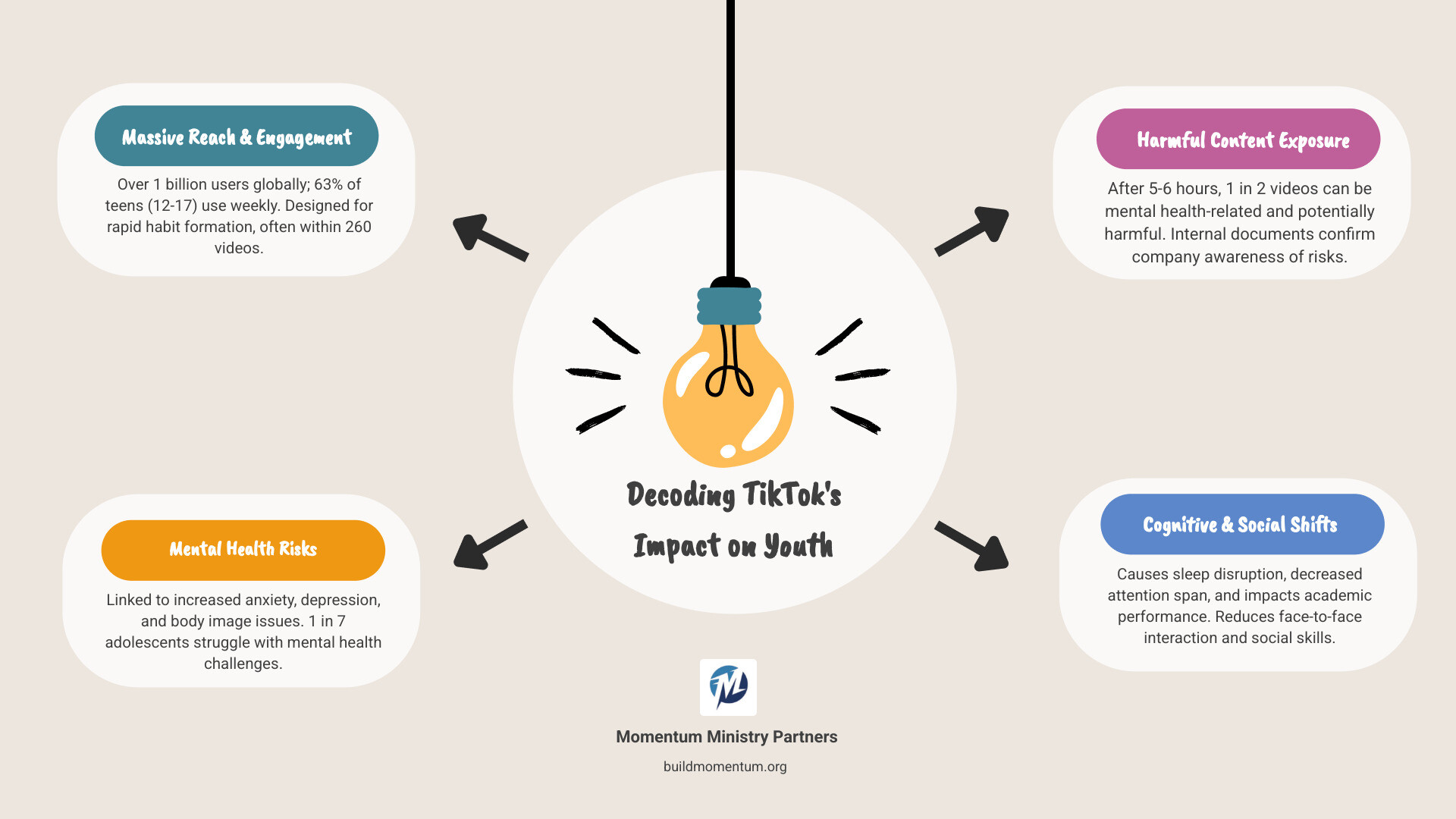
TikTok effects on youth are reshaping how an entire generation communicates, learns, and forms their identity. With over 1 billion monthly active users globally and 63% of U.S. teens (13–17) saying they use TikTok, this isn’t a passing trend
Key Effects of TikTok on Youth:
- Mental Health: Increased rates of anxiety, depression, and body image issues
- Addiction: Platform designed to form habits in under 35 minutes (260 videos)
- Sleep Disruption: Late-night scrolling and blue light exposure affecting rest
- Social Skills: Reduced face-to-face interaction and communication abilities
- Academic Performance: Decreased attention span and focus on schoolwork
- Identity Formation: Constant comparison and validation-seeking behavior
- Positive Potential: Creative expression, community building, and skill development
The reality is complex. TikTok offers genuine opportunities for creativity, connection, and even faith-sharing. Yet research shows that after just 5-6 hours on the platform, nearly 1 in 2 videos shown to teen accounts become mental health-related and potentially harmful. Internal documents from lawsuits reveal that TikTok executives knew about these risks but prioritized engagement over user well-being.
One in seven adolescents aged 10-19 now struggles with mental health challenges. While social media isn’t the only factor, it’s a significant one we cannot ignore.
This guide explains the most documented TikTok effects on youth and offers a practical, Christ-centered path forward for families and leaders. Whether you’re a parent trying to protect your child, a youth pastor seeking to guide students, or a church leader equipping families, you need clear insight into how this platform works and what it’s doing to young minds and hearts.
I’m Jeff Bogue, and I’ve spent over three decades in ministry leadership, working closely with thousands of young people and their families, navigating the challenges of growing up in an increasingly digital world. Through my work as President of Momentum Ministry Partners and Senior Pastor of Grace Church, I’ve witnessed the TikTok effects on youth and helped countless families develop healthier relationships with technology while keeping Christ at the center.
The Allure and the Algorithm: Why TikTok is So Captivating
TikTok, launched in 2016 by ByteDance, has rapidly become a dominant force in youth culture. It allows users to create and share short videos, ranging from comedic skits to dance routines, educational snippets, and personal vlogs. Its appeal lies in its dynamic, engaging, and highly personalized content delivery. With over a billion active users globally, nearly half of whom are between 10 and 29 years old, TikTok is now one of the most widely used platforms among U.S. teens, consistently ranking near the top alongside YouTube, Instagram, and Snapchat.

The magic behind TikTok’s captivating power is its “For You” Page (FYP) and its hyper-personalized algorithm. This isn’t just a feed of friends’ posts; it’s a constantly evolving stream of content custom precisely to each user’s tastes, often introducing new creators and topics. This low barrier to content creation means anyone can go viral, fueling a sense of possibility and participation that keeps users hooked. Viral trends and challenges further amplify engagement, fostering a sense of community around shared experiences, however fleeting.
However, this captivating design is also precisely what makes TikTok so potent—and potentially problematic. Internal documents and research suggest that the platform is engineered for algorithmic addiction. Reporting on previously hidden lawsuit materials, NPR/Kentucky Public Radio described internal TikTok findings that claim it takes about 260 videos to form a habit, potentially around 35 minutes of use for teens. The infinite scroll design, coupled with the rapid-fire, short video format, creates a constant, unpredictable reward system that can be incredibly difficult to disengage from.
What Makes TikTok’s Algorithm So Powerful?
TikTok’s algorithm is a marvel of artificial intelligence, constantly learning and adapting to keep us scrolling. It primarily relies on a complex array of “user signals” to determine what content appears on our FYP. These signals include:
- Watch time: How long we watch a video, especially if we rewatch it.
- Likes and shares: Our direct affirmations of content.
- Comments: Our active engagement and discussion.
- Account follows: Who we choose to follow after seeing their content.
- Content categories: The genres or themes of videos we interact with.
This rapid learning creates a deeply personal and often uncanny viewing experience, making us feel seen and understood by the platform. However, it also creates “filter bubbles” or “echo chambers,” where we are primarily exposed to content that reinforces our existing interests or biases. This hyper-personalization differs significantly from older social media platforms, which often prioritized content from our direct social circle. On TikTok, the algorithm often trumps our followers, pushing content from strangers that it believes we will find engaging. These TikTok effects on youth can be a double-edged sword: discovery can spark learning, but it can also accelerate habit loops and narrow what a teen sees.
The Psychology of the Scroll
The endless scroll and personalized feed tap into fundamental psychological principles that drive compulsive behavior. It’s a classic example of a “variable reward system,” similar to a slot machine. Just like pulling a lever and not knowing if you’ll win, each swipe on TikTok offers the unpredictable thrill of finding a new, highly engaging video. This intermittent reinforcement is incredibly powerful in creating habit loops.
Beyond the reward system, the “Fear of Missing Out” (FOMO) plays a significant role. With trends constantly emerging and disappearing, there’s an underlying pressure to stay connected and current. Social validation, through likes, comments, and shares, provides immediate boosts of dopamine, linking our self-worth to online engagement. This combination of low-effort entertainment, instant gratification, and the brain’s natural preference for novelty can shorten attention spans, making it harder for youth to engage with longer-form content or sustained tasks. We see these TikTok effects on youth in our churches when sustained attention during a Biblical lesson becomes harder for some students.
The Hidden Costs: Documented TikTok Effects on Youth Mental Health
While TikTok can be a source of entertainment and connection, a growing body of research and alarming reports highlight its significant negative Tiktok effects on youth mental health. The U.S. Surgeon General has issued advisories, and lawsuits against TikTok by state attorneys general are shedding light on internal company awareness of these harms. Studies indicate a correlation between high social media use and increased rates of anxiety, depression, and other mental health challenges among adolescents.

A systematic review published in European Child & Adolescent Psychiatry highlighted widespread concerns about TikTok’s impact on adolescent mental health. The review, which included studies from various countries, found that most indicated an overall negative impact, including lower life satisfaction, increased depressive symptoms, higher levels of anger and loneliness, and a heightened risk of problematic use. Crucially, it noted that prolonged screen time, especially passive consumption, can lead to poor sleep quality and bedtime procrastination, directly affecting the well-being of our youth.
The Comparison Trap: Body Image and Self-Esteem
One of the most insidious TikTok effects on youth stems from the constant exposure to idealized images and lifestyles, fueling a relentless “comparison trap.” Beauty filters, like the infamous ‘Bold Glamour’ filter, can drastically alter appearances, creating unrealistic beauty standards that are impossible to achieve in real life. Concerns about hyper-realistic beauty filters have intensified as researchers and journalists have documented how these effects can amplify unrealistic standards.
Research from Columbia University Medical Center and other studies emphasize how social media contributes to body image issues and low self-esteem. Young people are bombarded with images of seemingly perfect influencers, leading to feelings of inadequacy, body dysmorphia, and even the development of eating disorders. Content promoting extreme diets or even “pro-eating disorder” narratives, whether intentional or not, can easily find its way into a vulnerable teen’s feed. The constant pressure to perform, curate an ideal online persona, and receive social validation can be crushing, making it difficult for young people to find their identity and worth outside of external approval.
The Downward Spiral: How the Algorithm Can Amplify Harmful Content
Perhaps the most concerning aspect of TikTok’s algorithm is its ability to lead users down “mental health rabbit holes.” Amnesty International found that teen-like accounts could be pulled into ‘rabbit holes’ of depressive and self-harm-related content in the ‘For You’ feed within hours. In some cases, within 3 to 20 minutes of manual research, multiple recommended videos in a single hour romanticized, normalized, or even encouraged suicide.
The algorithm’s hyper-personalization, while seemingly helpful, can rapidly escalate exposure to concerning content. If a teen interacts with a video about anxiety, they might soon find their entire FYP filled with content romanticizing depression, promoting self-diagnosis trends (like ADHD, autism, or dissociative identity disorder), or even leading to what some medical professionals term “mass sociogenic illness,” such as “TikTok tics.” This phenomenon sees young people developing tic-like behaviors after prolonged exposure to videos of others exhibiting similar symptoms. Internal documents from the company itself have been alleged to show awareness of these dangers, yet the design persists, prioritizing engagement above all else.
Beyond the Screen: The Real-World TikTok Effects on Youth
The impact of TikTok extends far beyond the digital world, manifesting in tangible real-world consequences for our youth. Prolonged and excessive use can contribute to what some are calling “TikTok brain”—a state where constant, rapid-fire content consumption leads to a decreased attention span and challenges with deeper cognitive processes. Internal research from lawsuits found that “compulsive usage correlates with a slew of negative mental health effects like loss of analytical skills, memory formation, contextual thinking, conversational depth, empathy, and increased anxiety.”
Studies also link problematic TikTok use to significant academic challenges. Research published in Acta Psychologica indicates that while general TikTok use might not directly impact academic performance, “TikTok self-control failure” is strongly linked to negative outcomes like bedtime procrastination and poor sleep quality. This disruption to sleep, often exacerbated by the blue light emitted from screens, directly impacts a student’s ability to focus and perform in school. Furthermore, the displacement of face-to-face interaction by constant online engagement can lead to atrophied social skills, making it harder for youth to build and maintain meaningful in-person relationships. We see this play out in our youth groups when students struggle with genuine conversation, preferring to interact through their phones.
Finding the Light: The Positive Potential of TikTok
While the concerns surrounding TikTok’s impact on youth mental health are significant and warrant serious attention, it’s equally important to acknowledge the platform’s potential for good. When approached with intentionality and discernment, TikTok can be a powerful tool for positive engagement and community building, even within a Christian framework.
TikTok offers incredible avenues for creative expression. Young people can develop skills in video editing, storytelling, and digital content creation. It provides a platform for niche communities to thrive, allowing individuals to connect over shared interests, hobbies, or even health conditions. For some, TikTok has become a space to destigmatize mental health conversations, offering a sense of belonging and validation for those who feel isolated. Mental health nurse practitioners and psychotherapists, for example, have used the platform to create supportive communities where mental health is openly discussed, reaching individuals who might otherwise feel alone.
Educational content, often identified by hashtags like #LearnOnTikTok, also flourishes, providing accessible information on a vast array of subjects. From a faith perspective, TikTok presents unique opportunities for digital evangelism and spreading positive, Biblical messages. Christian creators are using the platform to share their faith, lead worship, and offer encouragement, reaching a generation that spends significant time online. For us at Momentum Ministry Partners, we believe in equipping leaders to leverage every tool available to draw youth closer to Christ.
A Christian Response: Guiding Youth Toward Digital Wisdom
As Christian parents and leaders, our approach to social media, including TikTok, must be rooted in timeless Biblical principles. We are called not to fear technology, but to exercise wisdom and discernment in how we engage with it.
- Stewardship of Time: Ephesians 5:15-16 reminds us to “look carefully then how you walk, not as unwise but as wise, making the best use of the time, because the days are evil.” Our time is a precious gift from God, and we must teach our youth to steward it wisely, ensuring that online engagement doesn’t displace time spent in prayer, Bible study, family, and in-person community.
- Guarding the Heart and Mind: Proverbs 4:23 instructs us to “Guard your heart above all else, for everything you do flows from it.” We must help our youth understand that the content they consume directly impacts their thoughts, emotions, and spiritual well-being. This means being vigilant about what enters their minds through the digital portal.
- Thinking on What is True, Noble, and Pure: Philippians 4:8 provides a powerful filter for all media consumption: “Finally, brothers and sisters, whatever is true, whatever is noble, whatever is right, whatever is pure, whatever is lovely, whatever is admirable—if anything is excellent or praiseworthy—think about such things.” We encourage youth to apply this filter to their TikTok feeds, actively seeking out content that aligns with God’s character and values.
- Identity in Christ vs. Online Validation: The constant pursuit of likes and followers on TikTok can subtly shift a young person’s sense of identity from being rooted in Christ to being dependent on external validation. We must consistently remind our youth that their worth is found in their identity as beloved children of God, not in fleeting online approval. This unchanging truth is the bedrock of their self-esteem.
- Digital Discipleship: We have an opportunity to engage in digital discipleship, teaching our youth how to steer the online world with integrity, kindness, and a desire to glorify God. This involves equipping them to be lights in digital spaces, sharing their faith authentically, and using platforms like TikTok to spread hope and truth.
Practical Strategies for Parents and Guardians
Navigating TikTok with your children requires an active, intentional approach. Here are some practical strategies we advocate for:
- Open and Honest Communication: Start conversations early and keep them ongoing. Ask your children what they enjoy on TikTok, what challenges they face, and what content makes them uncomfortable. Listen without judgment.
- Setting Clear Boundaries and Time Limits: Work with your children to establish realistic screen time limits for TikTok, especially around mealtimes and before bed. Internal TikTok documents showed their time-limit tool had little impact on usage, so external accountability and family rules are crucial.
- Tech-Free Zones: Designate certain areas or times as tech-free, such as bedrooms after a certain hour, during family meals, or during dedicated family time.
- Using Parental Controls (and their limitations): Use TikTok’s built-in ‘Family Pairing’ and ‘Restricted Mode,’ but treat them as supports, not substitutes, for active parenting and media discipleship
- Co-Watching and Discussing Content: Occasionally, watch TikTok with your children. This provides natural opportunities to discuss themes, trends, and the messages they are encountering.
- Modeling Healthy Phone Habits: Our children learn from us. Model the behavior you want to see by putting your own phone away during family time, meals, and before bed.
- Fostering Offline Identity and Hobbies: Encourage and support your children’s involvement in offline activities, sports, arts, and in-person social interactions. Help them build a strong sense of self and purpose that is not dependent on their online presence.
- Praying for and with Your Children: Commit to praying for your children’s digital wisdom, discernment, and protection from harmful content. Pray with them about their online experiences and challenges.
Here are some conversation starters for talking to teens about TikTok:
- “What’s the funniest/most interesting thing you saw on TikTok today?”
- “Have you ever seen something on TikTok that made you feel uncomfortable or sad?”
- “How do you decide what’s real or fake when you see a trend on TikTok?”
- “Do you ever feel pressure to look or act a certain way because of what you see on TikTok?”
- “What would you do if you saw someone being mean or bullied in the comments?”
- “How does TikTok make you feel about yourself or your life?”
- “What are some ways we can make sure TikTok doesn’t take over our time for other important things?”
Equipping the Church for the Digital Age
The local church, through its leaders and community, plays a vital role in guiding youth through the complexities of the digital age. At Momentum Ministry Partners, we believe in equipping youth leaders with the resources and training they need to effectively minister in this context.
- The Role of Youth Leaders: Youth pastors and leaders are on the front lines, building relationships and discipling young people. They need to be informed about platforms like TikTok, understanding both the dangers and the opportunities it presents.
- Creating a Culture of Authenticity: In a world of curated online personas, the church must be a place where youth can be their authentic selves, free from judgment and the pressure to perform. This fosters a safe environment for open discussions about their struggles with social media.
- Small Group Discussions on Social Media: Incorporate discussions about social media use, its challenges, and Biblical principles into small group settings. This allows youth to share experiences, learn from peers, and receive guidance from trusted adults.
- Media Literacy from a Biblical Perspective: Teach youth how to critically evaluate online content through a Biblical lens. Help them discern truth from falsehood, identify harmful messages, and understand the motivations behind what they see.
- Emphasizing the Value of the Local Church and In-Person Community: Counter the isolating effects of excessive screen time by highlighting the irreplaceable value of face-to-face interaction, genuine community, and shared worship within the local church. We must create compelling in-person experiences that draw youth away from their screens and into meaningful relationships.
- Pointing Youth to Their Unchanging Identity in Christ: When identity is constantly shifting based on trends and online validation, the church must consistently anchor youth in their unchanging identity as children of God, loved and valued regardless of their online performance.
- Partnering with Parents: The church can be a crucial support system for parents, offering resources, workshops, and a community where they can share concerns and learn strategies for navigating their children’s digital lives.
Frequently Asked Questions about TikTok and Youth
How is TikTok different from other social media like Instagram or YouTube?
TikTok’s core difference lies in its uniquely aggressive and powerful algorithm. While platforms like Instagram and YouTube often prioritize content from accounts you follow or channels you subscribe to, TikTok’s “For You” Page prioritizes viral content from anyone. Its algorithm is designed to keep you engaged by constantly serving up new, highly personalized, short-form videos, regardless of who you follow. This creates a more passive, discovery-driven, and potentially more habit-forming viewing experience. The rapid-fire, endless scroll is a key feature that distinguishes it, making it easier to fall into content “rabbit holes.”
What does the Bible say about social media?
While the Bible doesn’t mention social media by name, its principles are timeless and directly applicable to our digital lives. We are called to be wise stewards of our time (Ephesians 5:15-16), using it purposefully for God’s glory rather than letting it be consumed by distractions. The Bible instructs us to guard our hearts above all else (Proverbs 4:23), recognizing that what we allow into our minds profoundly impacts our spiritual and emotional well-being. Furthermore, Philippians 4:8 encourages us to fix our thoughts on what is true, noble, right, pure, lovely, admirable, excellent, or praiseworthy. This Biblical filter challenges us to critically evaluate social media content, asking if it builds us up in Christ or pulls us away. Our engagement with digital platforms should reflect our Christian values and our desire to honor God in all things.
Is there a “safe” way for my teen to use TikTok?
Achieving “safety” on TikTok requires constant vigilance and proactive engagement from both parents and teens. We recommend a multi-faceted approach:
- Use Privacy Settings: Work with your teen to ensure their account is private, limiting who can see and interact with their content.
- Set Firm Time Limits: Use TikTok’s “Family Pairing” features to set daily screen time limits. However, understand that internal documents suggest these tools have limited impact on actual usage reduction, so external accountability (like family rules for tech-free times) is crucial.
- Ongoing Conversations: Maintain an open dialogue about the content they encounter, discussing healthy vs. harmful trends, cyberbullying, and unrealistic portrayals of life.
- Intentional Content Curation: Encourage your teen to actively “train” their “For You” Page by engaging with positive, uplifting, and educational content, and consistently marking harmful or unwanted videos as “Not Interested.”
- Focus on Offline Identity: Help your teen cultivate a strong sense of self and purpose grounded in their identity in Christ, rather than relying on online validation.
While these strategies can mitigate risks, acknowledge that no online platform is entirely “safe.” Constant parental awareness, Biblical guidance, and fostering a strong, Christ-centered identity are essential for navigating TikTok healthily.
Conclusion: Fostering Digital Resilience with an Eternal Perspective
The TikTok effects on youth present a complex landscape—a vibrant digital playground for creativity and connection, but also a potential minefield for mental and spiritual well-being. We have seen how its addictive algorithms, the comparison trap, and the rapid amplification of harmful content can lead to anxiety, depression, body image issues, and a host of other challenges. Yet, we also recognize its potential for positive expression, community building, and even spreading the Gospel.
The ultimate solution is not total avoidance, but rather intentional engagement, informed discernment, and proactive discipleship. We must equip our young people with a strong identity rooted in Christ, an identity that cannot be shaken by likes, trends, or the ever-changing algorithms of social media. Our faith teaches us that true worth comes from being children of God, not from online validation.
At Momentum Ministry Partners, we equip churches and families to respond with wisdom, clarity, and hope, so students can thrive both online and offline. We believe in providing life-changing experiences and practical leadership training that empowers youth leaders to guide students with Biblical wisdom, helping them steer the digital world for God’s glory. Together, we can help our youth thrive both online and offline, building a foundation of faith that stands firm in any season.
Ready to turn digital pressure into discipleship momentum? Bring your students to the Momentum Youth Conference for life-changing sessions, hands-on ministry, and a week that helps them build an identity rooted in Christ, not algorithms.






0 Comments