

Why Building Youth Leaders Matters for Your Church and Community
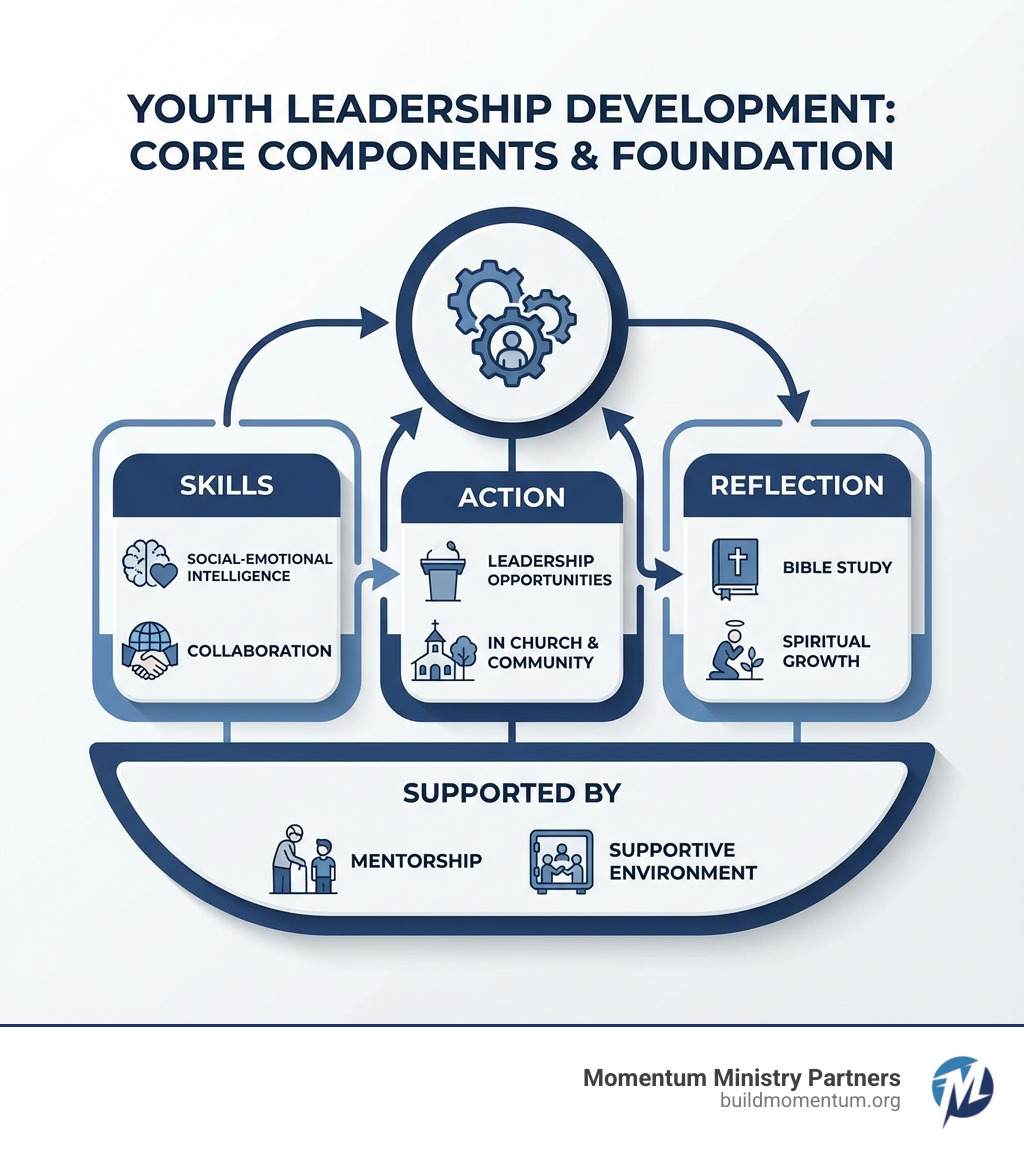
Building youth leaders is one of the most impactful investments a church can make. It involves intentionally equipping young people with skills, providing opportunities for action, and grounding them in a firm spiritual foundation. Through mentorship and a supportive environment, youth develop confidence and a deeper faith, while churches gain fresh energy and stronger community ties.
The opportunity is significant. Many churches are serving students who are eager for meaningful ownership, yet few ministries have a clear pathway for building youth leaders with real responsibility. Even as leadership programs grow in schools and communities, many churches still lack a consistent pathway for building youth leaders inside student ministry. Yet, many young people are optimistic and ready to lead.
Building youth leaders isn’t just about preparing them for future roles—it’s about empowering them to make a difference right now. When we invest in youth leadership, we practice Biblical discipleship, following the example of Jesus, who invested deeply in His young disciples, and Paul, who mentored Timothy as a young leader. This guide explores how to create a culture where young leaders can thrive, changing their lives, the church, and the community for Christ’s Kingdom.
The Biblical Foundation and Core Principles of Youth Leadership
At Momentum Ministry Partners, we believe that building youth leaders is fundamentally rooted in Biblical principles. The model for Christian leadership begins with the servant leadership taught by Jesus Himself. He showed His disciples how to lead by washing their feet, instructing them that the greatest among them must be a servant.
Consider Jesus’s investment in His young disciples, whom He shaped into world-changing leaders. Similarly, Paul mentored Timothy, encouraging him not to let his youth be a barrier but to set an example in speech, conduct, love, faith, and purity. This highlights the Biblical precedent for empowering young people. We also recognize that every young person has unique spiritual gifts from God. Nurturing these gifts within a leadership framework helps them find their God-given purpose.
The benefits are profound. For youth, it fosters personal growth and a powerful sense of purpose. For the church, it brings vitality and ensures a strong pipeline of future leaders. This extends to the community, as young people bring energy and innovative solutions to pressing issues. Our approach pairs character, competency, and calling, an integrated framework that student ministry cohorts can reinforce through coaching and accountability.
What Makes Youth Leadership Different?
Youth leadership focuses more on guided exploration and experience, whereas adult leadership is often honed through years of practice. A key distinction lies in the developmental stage. Emotional intelligence matters because it shapes how students communicate, resolve conflict, and lead under pressure, core outcomes of building youth leaders. By focusing on this area, we can significantly improve a young leader’s effectiveness.
Young people also bring a unique lens to problem-solving. Unburdened by conventional thinking, their fresh perspectives can lead to innovative solutions for challenges both inside and outside the church.
Core Benefits for Youth and the Church
When we intentionally invest in building youth leaders, the ripple effects are transformative. Youth gain confidence, their faith deepens as they apply Biblical principles to real-world challenges, and they develop a stronger sense of purpose. We aim to help students find their identity in Christ as they grow.
For the church, youth leaders bring fresh energy and ideas, creating a more intergenerational, vibrant, and sustainable community. Beyond the church, these young leaders become agents of positive social change, using their voices to influence their communities for the better.
Identifying and Developing Essential Leadership Skills

Building youth leaders requires a holistic approach that focuses on both character and competency. True leadership flows from a deep spiritual foundation combined with practical abilities.
Foundational Character Traits for Christian Leaders
Character is paramount for Christian leaders. We seek to cultivate traits rooted in Biblical teaching, including:
- Faithfulness: Demonstrating integrity, sincerity, and dependability.
- Integrity: Living a life that aligns with Christian values, both publicly and privately.
- Humility: Recognizing that all gifts come from God and leading with a servant’s heart.
- A Teachable Spirit: Being open to learning, correction, and growth.
- Servant’s Heart: Emulating Jesus by seeking to serve others
Practical Competencies for Building Youth Leaders
Alongside character, we equip young leaders with practical skills developed through guided practice:
- Communication: This includes active listening, empathy, and non-judgmental communication to build trust.
- Public Speaking: Clearly and confidently sharing ideas in groups of all sizes.
- Conflict Resolution: Steering disagreements toward reconciliation and understanding.
- Decision-Making: Making wise, Biblically informed choices.
- Collaboration: Working effectively in teams and valuing diverse perspectives
Spiritual Disciplines for Growing Leaders
Spiritual disciplines are the lifeblood of a young Christian leader’s journey, nourishing their soul for service:
- Consistent Prayer: Regularly communicating with God for wisdom and guidance.
- Personal Bible Study: Engaging with God’s Word to understand His will, one of the 3 Essentials to Effective Student Discipleship.
- Corporate Worship: Participating in the larger body of Christ to draw strength and perspective.
- Authentic Fellowship: Building genuine, accountable relationships with other believers.
- Solitude and Reflection: Taking time away from distractions to listen to God and discern His leading.
A Practical Framework for Building Youth Leaders in Your Church

When it comes to building youth leaders, intentionality is key. We must create a practical framework that moves from theory to practice by actively recruiting, training, and retaining young leaders. Our “Step-by-Step Creating a Student Leader Training Program” offers a comprehensive guide to establishing such a framework.
Creating a Supportive Environment for Growth
A supportive environment is where building youth leaders becomes normal, especially when student ministry cohorts create consistent rhythms of feedback, practice, and encouragement. It’s a place where they feel safe to take risks, learn from mistakes, and grow into their God-given potential. This means building trust with teens through active listening and empathy, creating a safe space for vulnerability, encouraging questions, celebrating effort, and fostering a deep sense of belonging for every young person.
The Crucial Role of Mentorship
Mentorship is one of the most powerful tools for building youth leaders. It pairs young people with wise, experienced guides who model Christian leadership. When recruiting mentors, look for mature believers who embody faithfulness, wisdom, and a genuine love for young people. These youth-adult partnerships are about Christian leadership mentoring the next generation. Also, consider the impact of peer mentorship, where high schoolers guide middle schoolers, building leadership skills in both groups.
Strategies for Training and Engagement
Effective training turns students from helpers into owners, one of the clearest markers of building youth leaders. Give young leaders actual responsibilities, entrusting them with meaningful tasks that show you value their contributions. This is about starting a student leadership team and letting them own their roles. Engage them in service-learning projects and community engagement to show them the impact of their faith outside the church walls.
Youth-Led Project Ideas for Your Church:
- Plan and lead a youth service, from the theme to the message.
- Lead a small group Bible study, preparing the lesson and facilitating discussion.
- Organize a community food drive or clothing donation for a local shelter.
- Create a social media campaign to promote a ministry event.
- Mentor a younger student in the church.
Overcoming Challenges and Measuring Impact
Building youth leaders is a rewarding ministry, but it comes with challenges. Acknowledging and proactively planning for these difficulties is crucial for long-term success.
Common Obstacles in Building Youth Leaders and How to Overcome Them
Here are some common obstacles and how to steer them:
- Student Apathy: Apathy often stems from a lack of ownership. Overcome this by involving youth in identifying problems and creating solutions, making the leadership journey their own.
- Lack of Committed Adult Volunteers: Many ministries struggle to find enough volunteers. Overcome this by clearly defining roles, providing training, and emphasizing the profound impact mentors have.
- Fear of Failure (in Youth and Adults): Foster an environment where mistakes are seen as learning opportunities, not endpoints. Celebrate effort and provide grace to encourage healthy risk-taking.
- Avoiding Tokenism: It’s easy to give youth a “seat at the table” without a real voice. As one youth delegate noted, proximity to power can create “the illusion of youth representation.” Overcome this by genuinely integrating youth into decision-making and giving them real responsibilities.
- Time Constraints: Both youth and adults have packed schedules. Design flexible programs that focus on quality over quantity, ensuring the time invested is impactful. Our article “Four Challenges Young Church Leaders Will Face” digs deeper into some of these problems.
Measuring the Success of Your Program
How do we know if our efforts are making a difference? We use a combination of measures to gauge impact. Qualitative measures include testimonies and stories of change from youth, parents, and mentors. These narratives provide rich insights into personal and spiritual growth. Track a few simple indicators: consistent participation, follow-through on responsibilities, and peer influence (are other students stepping up because they did?) Creating regular feedback loops with youth and mentors allows for continuous improvement.
The Ripple Effect: How Youth Leaders Transform the Church and Community
The investment in building youth leaders creates a powerful ripple effect. They bring fresh perspectives that can revitalize ministries, drive positive social change in their communities, and are more likely to engage in civic life. By nurturing young leaders today, we ensure the vitality and sustainability of the church for generations to come.
Frequently Asked Questions about Youth Leadership Development
As we partner with churches to raise up the next generation of Christian leaders, we often encounter similar questions. Here are some of the most common, along with our insights.
At what age should we start developing youth leaders?
The journey of building youth leaders can begin earlier than you might think. The key is to offer age-appropriate responsibilities that challenge them to grow incrementally.
- Elementary School: Focus on service projects and simple roles like helping younger children to build a sense of teamwork and responsibility.
- Middle School: Introduce more structured roles, such as assisting in children’s ministry or co-leading small group discussions with guidance. This is also a great time for high school students to mentor middle school students.
- High School: Implement formal leadership teams where students take on significant roles like planning events, serving on worship teams, or initiating outreach projects.
How do we handle a young leader who makes a significant mistake?
Mistakes are powerful learning opportunities. When a young leader makes a significant mistake, we adopt a grace-filled, restorative approach.
- Frame it as a Learning Opportunity: Instead of punishment, engage in an open conversation about what happened and what can be learned from it.
- Private Correction, Public Support: Address the mistake privately to preserve dignity and trust, while continuing to offer public support and encouragement.
- Focus on Restoration: The goal is to restore the young person, their relationships, and any harm caused. This involves listening, understanding, and guiding them toward making amends.
- Give Second Chances: Learning from mistakes often makes for stronger, more resilient, and more compassionate leaders.
What’s the difference between a youth leader and a good volunteer?
Both are invaluable, but there’s a key distinction. A good volunteer excels at completing assigned tasks. A youth leader, however, is developed to do more. As we teach in “3 Things You Must Do to Raise Up Student Leaders“, the goal is to move them beyond participation toward influence.
- Initiative vs. Task Completion: A leader identifies needs and proposes solutions, rather than just waiting for instructions.
- Influence vs. Participation: A leader seeks to influence and empower their peers to take action and grow.
- Empowering Others vs. Individual Contribution: A leader focuses on building up their team and fostering collective ownership.
Conclusion: Investing in the Leaders of Today and Tomorrow
We’ve explored the profound importance of building youth leaders, grounding our efforts in Biblical principles and practical strategies. This journey is not merely about preparing for the future but about empowering young people to lead and make a difference right now. At its core, leadership development is discipleship—shaping young lives to reflect Christ and impact His Kingdom.
By creating supportive environments, providing intentional mentorship, and offering real opportunities to lead, we strengthen the fabric of our churches and communities for generations to come.
At Momentum Ministry Partners, we are committed to equipping the church to raise up leaders who will impact the world for Christ. We believe in the power of young people to lead today, and we are dedicated to providing the resources and training necessary to see them flourish.
Want a week that accelerates building youth leaders? Momentum Youth Conference is where students grow, serve, and return home ready to lead. Explore details of the best week of summer today!






0 Comments