

Walk into almost any youth group on a Wednesday night, and you’ll probably see some version of organized chaos—students laughing, competing, shouting across the room, and occasionally arguing about the rules. Games are often one of the most visible (and loudest) parts of youth ministry.
But here’s the real question: are our games actually building community in youth ministry, or are they just filling time?
When games are chosen intentionally, they can become powerful tools for connection, trust-building, and spiritual belonging. When they’re not, they can unintentionally isolate students, reinforce cliques, or turn church into just another entertainment venue.
At Momentum Ministry Partners, we believe that play—when done with purpose—can be one of the most effective ways to help students feel known, included, and invested in the life of the church.
Let’s explore how to use games not just for fun, but for forming a real community in youth ministry.
Why Community Matters More Than Ever in Youth Ministry
Teenagers today are more connected digitally than ever—and more isolated relationally than any generation before them. Many students walk into a youth group carrying anxiety, loneliness, and uncertainty about where they belong.
This is why community in youth ministry is not a “nice to have”—it’s essential.
Biblical discipleship doesn’t happen in isolation. Faith is formed in relationships, in shared experiences, and in spaces where students feel safe enough to be themselves. Games, when designed with intention, lower social barriers and create shared moments that accelerate relational trust.
A well-designed game can:
-
Help new students feel included faster
-
Break down social hierarchies and cliques
-
Create shared memories that bond students together
-
Open the door for deeper spiritual conversations later
In other words, games can serve as relational infrastructure for everything else you hope to accomplish.
The Difference Between Playing Games and Playing with Purpose
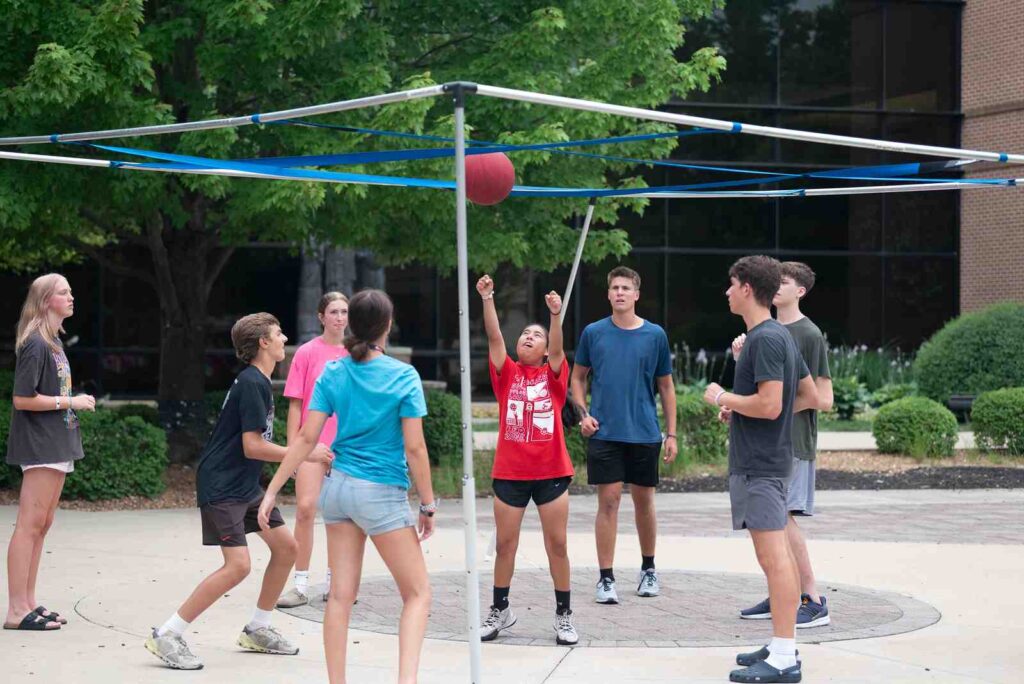
Not all games build community, and some can actually undermine it.
Games that only reward athleticism, speed, or extroversion often elevate the same students every week while others shrink further into the background. Over time, this creates spectators instead of participants.
Playing with purpose means choosing games that align with your deeper goal: fostering belonging, collaboration, and shared ownership of the group.
Before choosing a game, ask:
-
Does this require teamwork or cooperation?
-
Can students of all personalities participate meaningfully?
-
Does this create shared success, not just individual winners?
-
Will this help students interact with people outside their usual circle?
When these questions guide your decisions, games become ministry, not just momentum.
Types of Games That Build Community in Youth Ministry
1. Icebreakers That Actually Break the Ice
Icebreakers work best when they’re relational—not just silly.
Instead of games that spotlight individuals, choose ones that help students discover shared experiences, preferences, or stories.
Examples:
-
Human Bingo with prompts like “has moved schools,” “plays an instrument,” or “has younger siblings.”
-
Would You Rather with discussion follow-ups
-
Find Someone Who challenges that requires conversation
These activities help students realize quickly: “I’m not the only one.” That realization is foundational for community in youth ministry.
2. Team-Based Games That Require Collaboration
Games that require cooperation naturally foster connection. They shift the focus from individual performance to shared problem-solving.
Examples:
-
Building challenges using limited supplies
-
Relay-style games where each person’s contribution matters
-
Strategy games that require planning and communication
When students succeed—or fail—together, they form bonds. Even frustration can become a shared experience that strengthens trust.
3. Low-Pressure Games That Include Everyone
Some of the most community-building games are the least flashy.
Not every student wants to run, shout, or compete. Introverted or socially anxious students often feel invisible during high-energy games.
Balance your programming with games that are:
-
Seated or low-movement
-
Creative rather than competitive
-
Humor-based instead of performance-based
These moments communicate an important message: “There’s room for you here.”
4. Games That Lead to Meaningful Conversation
One of the most powerful uses of games is as a bridge to deeper discussion.
Games that involve storytelling, decision-making, or values naturally open the door to spiritual reflection.
Examples:
-
Scenario-based games where teams decide how they would respond
-
Games that involve ranking values or priorities
-
Reflection games that ask students to share one-word responses
When play leads into conversation, students begin to associate community in youth ministry with emotional safety and authenticity—not just fun.
How Games Shape Group Culture Over Time

Games don’t just fill space—they shape culture.
The types of games you choose week after week quietly teach students:
-
Who belongs
-
What’s valued
-
How people treat one another
If your games reward dominance, speed, or volume, those traits will define your culture. If your games reward collaboration, encouragement, and creativity, those become the norms.
A healthy community in youth ministry doesn’t happen by accident—it’s formed through hundreds of small, consistent choices.
Practical Tips for Using Games to Strengthen Community
Here are a few principles Momentum Ministry Partners encourages leaders to keep front and center:
Rotate Teams Intentionally
Avoid letting students self-select teams every week. Mix grades, genders, and friend groups to create new relational pathways.
Celebrate Effort, Not Just Winning
Affirm teamwork, encouragement, and creativity—not just victory.
Debrief When Possible
Even a 60-second reflection can help students connect the experience to real life:
-
What was hard?
-
Who helped you?
-
What did this feel like?
Pay Attention to Who’s Left Out
Watch body language. If certain students consistently disengage, adjust your approach.
When Games Support Discipleship, Not Distract from It
Some leaders worry that games take away from “real ministry.” In reality, relationships are the soil where discipleship grows.
When students feel connected:
-
They listen more openly
-
They trust leaders faster
-
They stay involved longer
-
They invite friends more confidently
Community in youth ministry isn’t built through content alone—it’s built through shared life.
Games, when used well, accelerate that process.
Building Momentum Beyond Game Night
At Momentum Ministry Partners, we help youth leaders think beyond individual events and toward long-term ministry health. Games are one piece of a larger ecosystem that includes leadership development, spiritual formation, and sustainable ministry rhythms.
When play is aligned with purpose, it becomes a catalyst—not a distraction.
Your goal isn’t just to entertain students for an hour. It’s to invite them into a community that reflects the heart of Christ—welcoming, relational, and transformational.
Final Thought: Play Is Serious Kingdom Work
Play might seem small, but its impact is not.
When students laugh together, struggle together, and succeed together, walls come down. Trust grows. Belonging takes root.
And that’s where real transformation begins.
Ready to Build a Community That Lasts?
If you’re looking for more than just another event, and instead want a catalyst for real community in youth ministry, Momentum Youth Conference is designed for exactly that.
Momentum Youth Conference creates space for students to worship together, grow together, and experience the kind of shared moments that turn youth groups into spiritual families. Through powerful teaching, engaging worship, and intentional community-building experiences, students don’t just attend, they belong.
Bring your students to Momentum Youth Conference and watch community take root, faith deepen, and momentum carry back into your ministry all year long.






0 Comments