

Why the Meaning of Christmas Matters
The meaning of Christmas is rooted in the birth of Jesus Christ, God’s Son, who came to Earth to offer salvation to humanity. For Christians, Christmas celebrates the moment God entered human history, bringing hope, peace, and the promise of eternal life. This truth goes far beyond traditions and gifts—it is about God’s love made real and the invitation to respond in faith and obedience.
Quick Answer: The Core Meaning of Christmas
- Religious Significance: Commemorates the birth of Jesus Christ, the Savior.
- Biblical Foundation: The Nativity story is found in the Gospels of Matthew and Luke.
- Central Message: God sent His Son to save people from their sins.
- Key Themes: Hope, peace, goodwill, and God’s presence with us (Emmanuel).
- Church Application: A discipleship-rich season for teaching, mentoring, and Bible study, especially among youth.
Every December, millions celebrate Christmas. While some focus on presents and festive meals, others attend church services to reflect on what it means that God became human. The holiday has become many things to many people, but at its heart, Christmas tells a story of divine love and intervention that shapes how Christians live, lead, and disciple the next generation.
In a world filled with trouble, the angel’s announcement to the shepherds rings true today: “I bring you good news that will cause great joy for all the people. Today in the town of David a Savior has been born to you; he is the Messiah, the Lord” (Luke 2:10–11, NIV). This was Heaven descending to Earth, God stepping into our reality to offer rescue and redemption.
Yet for many, the true meaning gets buried under holiday stress and cultural expectations. The season intended to celebrate God’s greatest gift can easily become focused on material ones. Understanding the Biblical foundation of Christmas helps us reclaim its true purpose and use this season for intentional Bible study and Christ-centered leadership, particularly with children and youth.
This article explores the meaning of Christmas from a Biblical perspective, highlighting how pastors, parents, and youth leaders can teach these truths clearly and practically. It is designed to equip you to open the Bible confidently, lead meaningful conversations, and help young people see Christmas as the beginning of God’s rescue plan, not just a festive event.
I’m Jeff Bogue, President of Momentum Ministry Partners. With over three decades in pastoral leadership, I’m passionate about equipping leaders and families to experience the transformative power of Christ’s birth, anchoring it in the Biblical truth of God’s love and redemption, and passing that truth on to the next generation.
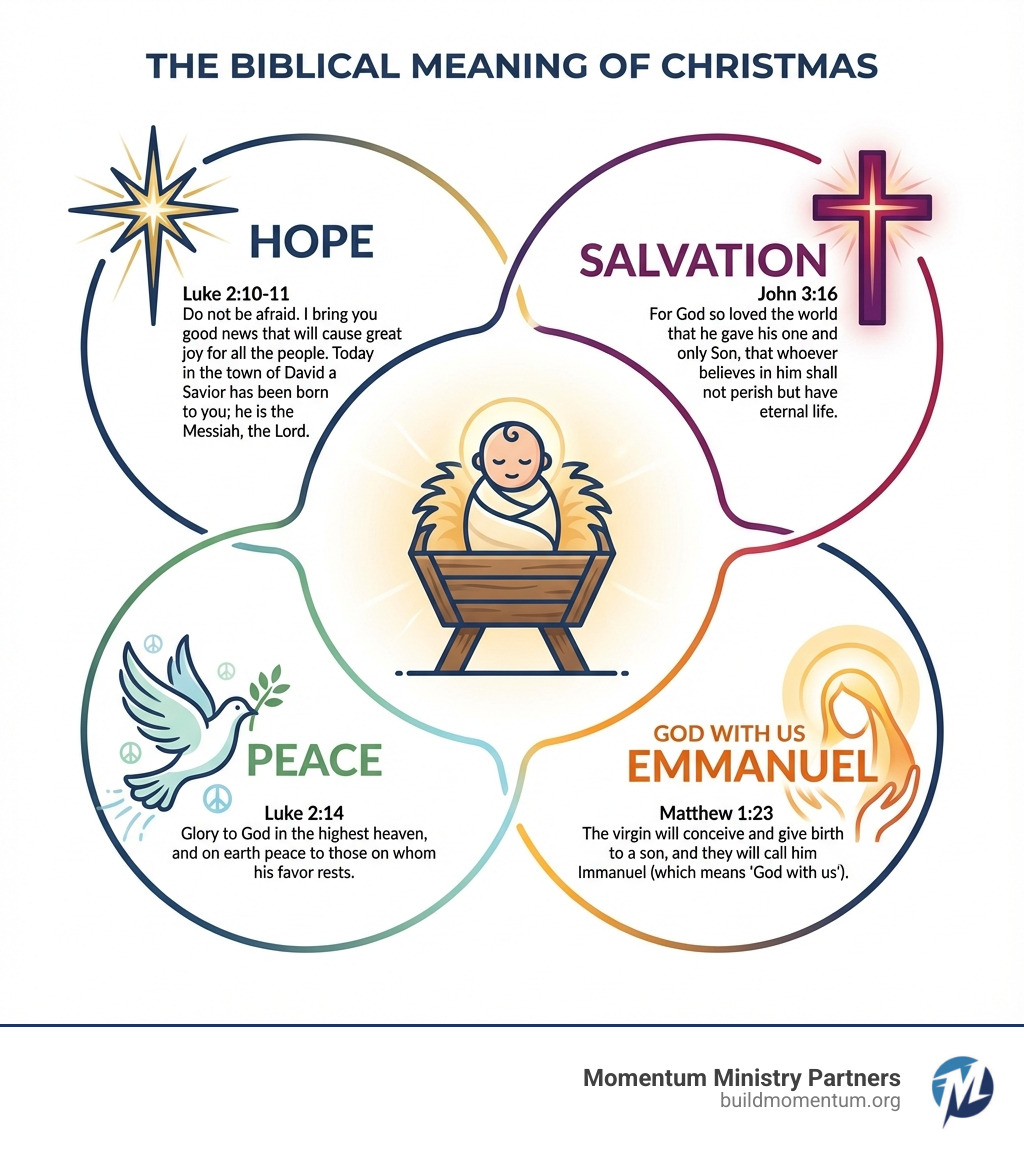
The Biblical Foundation: The Birth of Jesus Christ
The meaning of Christmas is rooted in the Biblical accounts of Jesus’s birth, which fulfill ancient prophecies and reveal God’s plan for humanity. The Incarnation—God becoming man—is a pivotal moment in Christian faith, marking Heaven’s descent to Earth. The Christmas message is the good news that God sent His only Son to save people from their sins, a story that begins with a cradle and leads to a cross and a crown.
For youth and church leaders, Christmas is a powerful entry point into the core message of the Bible. The Nativity is not a stand-alone story for one month of the year; it is the opening chapter of the Gospel that shapes a young Christian’s understanding of who Jesus is and why He came.
The Gospel Accounts of the Nativity
The Gospels of Luke and Matthew provide detailed narratives of the Nativity. Luke’s account (Luke 1–2) describes the angel Gabriel’s announcement to Mary, the journey to Bethlehem, the humble birth in a manger, and the angels proclaiming “great joy” to shepherds. Matthew’s Gospel (Matthew 1–2) focuses on Joseph’s perspective, the visit of the Magi who followed a star, and the Holy Family’s escape to Egypt from King Herod.
Though offering different details, both Gospels converge on a central truth: Jesus’s birth was divinely ordained, humble, and of immense significance. These passages are ideal for Bible study with youth because they:
- Connect Old Testament prophecy to New Testament fulfillment (for example, Isaiah 7:14 and Micah 5:2).
- Reveal key names and titles of Jesus: Savior, Christ (Messiah), Lord, Emmanuel.
- Show God working through ordinary people—Mary, Joseph, and the shepherds—in extraordinary ways.
When teaching youth, encourage them to:
- Read Luke 1–2 and Matthew 1–2 slowly and aloud in a group.
- Underline repeated words or phrases such as “do not be afraid,” “fulfilled,” and “good news.”
- List what each character learns about God and how they respond in faith or fear.
You can read the Christmas story from the Bible to explore these foundational texts and then guide students to compare the two Gospel accounts.
The Historical and Religious Significance
Jesus is recognized as the Messiah, the Son of God, and Savior—Emmanuel, which means “God with us” (Matthew 1:23). This title encapsulates the core of Christian belief: God chose to dwell among us, experiencing human life. The humility of His birth in a stable underscores God’s profound love and approachability.
The Incarnation is the ultimate demonstration of God’s love for a fallen world (John 3:16). Leading youth through these truths helps them see that Christmas is not sentimental fiction but the record of God acting in real history. Scholars have noted that early Christians placed strong emphasis on the reality of Jesus’ humanity and divinity as central to faith and doctrine (see, for example, discussions in the Anchor Yale Bible Dictionary and classic works like Athanasius’s On the Incarnation).
For Christians, celebrating God entering the world to atone for sin is far more important than knowing Jesus’s exact birth date. Understanding Jesus as the Savior is central to The Gospel and Our Part in Clarifying and Calling others to faith. Christmas gives leaders a natural opportunity to clarify the Gospel and invite students to trust Christ personally.
The Connection Between Birth and Salvation
Christmas marks the beginning of the salvation story, bridging the gap between a holy God and sinful humanity. The birth of Jesus initiates a new covenant and the hope of redemption, setting the stage for His death and resurrection at Easter.
In youth Bible studies, it is helpful to:
- Trace the storyline from the manger to the cross (Philippians 2:5–11; Luke 2; John 19–20).
- Ask: “Why did Jesus have to be born as a human in order to die for us?”
- Show that Christmas and Easter are inseparable parts of one redemptive plan.
The Incarnation is the first step in an act of divine love that offers humanity a path to reconciliation with God, a concept integral to a Christian World View. Through Jesus’s birth, we are offered eternal life and a restored relationship with our Creator. Helping youth connect these dots ensures that they see Christmas not as a sentimental story, but as the launch of God’s rescue mission that still changes lives today.
The Evolution of Christmas Celebrations
Christmas celebrations have evolved over centuries, shaped by Church history and various customs. While the holiday has changed, its core Christian message endures for believers and remains a rich season for Bible-centered teaching and discipleship.
From Sacred Feast to Modern Holiday
The observance of Jesus’s birth was formalized in the fourth century when church leaders designated December 25 as the date. Some historians note this date’s proximity to the winter solstice, which may have helped Christian themes permeate existing cultural practices. Research on the History of Christmas shows that after periods of both boisterous medieval festivals and Puritan bans, the 19th century redefined the holiday. Influential works by authors like Charles Dickens promoted a family-centered celebration focused on goodwill and compassion. By 1870, Christmas was a federal holiday in the United States, blending sacred observance with cultural traditions.
Recognizing this history helps church and youth leaders:
- Distinguish between Biblical truth and cultural custom.
- Teach students how to enjoy traditions without losing sight of the Gospel.
- Encourage critical thinking about what practices truly honor Christ.
A concise historical overview can frame a youth Bible study by asking: “Which parts of how we celebrate are commanded in the Bible, and which are cultural?” This question opens a healthy discussion about worship, tradition, and priorities.

How Different Cultures Interpret Christmas
Christmas is celebrated globally, with many cultures adapting its traditions. In the United States, it is observed religiously by most Christians and culturally by many non-Christians, becoming an integral part of the holiday season. This blend of sacred and secular is a hallmark of the modern Christmas experience.
For church leadership and youth ministry, this cultural mix presents both a challenge and an opportunity:
- Challenge: Students can confuse consumerism, entertainment, and social pressure with the true meaning of Christmas.
- Opportunity: The season naturally raises spiritual questions, opens doors for conversations, and brings people to church who may rarely attend otherwise.
Leaders can help teens engage culture wisely by:
- Comparing popular Christmas songs, movies, and advertisements with the Biblical narrative.
- Discussing how to live as a Christian in a culture that often uses Christmas language but ignores Christ.
- Encouraging students to see themselves as ambassadors for Christ during the holidays (2 Corinthians 5:20).
For believers, the core meaning of Christmas—the birth of Christ—remains central, even as cultural expressions diversify. Guiding youth to filter their celebrations through Scripture strengthens their discernment and deepens their faith.
The Role of Traditional Symbols
Many Christmas symbols, though seemingly secular, carry deep Christian meaning. Understanding them can enrich our appreciation for the season and serve as a powerful part of our Bible Study Purpose. They can also be effective teaching tools for children and teens.
- Christmas Trees: The evergreen tree, first used by German Christians in the 16th century, symbolizes the eternal life offered through Jesus Christ. Hanging a simple cross ornament or a Scripture verse on the tree can turn decorating into a brief family devotion.
- Christmas Lights: These symbolize Jesus as the Light of the World, who came to dispel the darkness of sin (John 8:12). Youth leaders might challenge students: “Where is God calling you to shine His light this Christmas?”
- Nativity Scenes: Popularized by Saint Francis of Assisi, these scenes are a direct visual representation of the Christmas story, focusing our attention on the humble birth of Jesus. Have students read Luke 2 while placing each figure in the scene and discussing their role.
- Colors (Red and Green): Red symbolizes the blood of Christ shed for our salvation, while green represents eternal life. These colors give an easy way to connect everyday decorations to deep Biblical truths.
- Candy Canes: Tradition suggests the shape represents a shepherd’s crook (Jesus as the Good Shepherd) and the letter “J” for Jesus. The red stripes can be used to talk about Christ’s sacrifice, and the white about His purity.
- Christmas Star: The Star of Bethlehem, which guided the Magi, symbolizes divine guidance and the fulfillment of prophecy (Matthew 2:1–12).
These symbols serve as tangible reminders of the spiritual truths we celebrate. A study from Rutgers University on The Surprising History of Christmas Traditions notes how many customs evolved over time, but Christian leaders can reclaim them as teaching tools that point clearly to Christ.
In a youth ministry context, you might:
- Assign each student a symbol to research, along with related Bible verses, and then present to the group.
- Create a “Christmas symbols scavenger hunt,” where students take photos of decorations and connect them to Scripture.
These activities help anchor Christmas traditions in Biblical understanding rather than empty routine.
Unpacking the Deeper Meaning of Christmas
Amidst commercialism, the core messages of Christmas—hope, love, and salvation—invite spiritual reflection. These are not seasonal trends but eternal truths that offer profound significance, guiding our Christian Influence in the world and shaping how we disciple the next generation.
The Core Christian Meaning of Christmas: Hope and Salvation
The meaning of Christmas for Christians is fundamentally about hope and salvation. It celebrates God’s ultimate act of love in sending His Son, Jesus, to bring “great joy, which shall be to all people” (Luke 2:10, KJV). This joy is not a fleeting happiness but a deep, abiding hope rooted in the promise of eternal life.
For youth and young adults facing anxiety, uncertainty, and pressure, the Christmas story speaks directly into their fears:
- God sees them, just as He saw the shepherds on the hillside.
- God comes near in Christ, rather than remaining distant.
- God offers forgiveness and new life, not merely temporary relief.
In a Bible study setting, leaders can:
- Have students identify the fears or questions of Mary (Luke 1:26–38), Joseph (Matthew 1:18–25), and the shepherds (Luke 2:8–20).
- Discuss how God’s messages of “Do not be afraid” speak into their own lives.
- Connect the manger to the cross by reading passages like Romans 5:6–11 and John 1:14–18.
The hope of Christmas is that the Savior has come, and His work is finished. That hope anchors Christian identity, especially for youth learning to define themselves not by performance or popularity, but by Christ.
Peace and Goodwill to All
The angelic proclamation of “on earth peace, good will to men” (Luke 2:14, KJV) is a cornerstone of the Christmas message. This is not just a wish for an absence of conflict, but a declaration of the peace that comes from reconciliation with God through Jesus (Romans 5:1). It calls Christians to pursue peace with God and others.
Living out this message means:
- Seeking reconciliation where relationships are broken.
- Extending forgiveness rather than holding grudges.
- Practicing humility, patience, and kindness in our homes and churches.
Youth leaders can model and teach this by:
- Leading a study on Ephesians 2:11–22, showing how Christ breaks down walls of hostility.
- Encouraging students to identify one relationship where they can take a step toward peace over the Christmas season.
- Involving youth in small acts of mercy—writing encouragement cards, visiting shut-ins with adult supervision, or helping families in need through the local church.
Engaging in Christian Service is a tangible way to honor the Prince of Peace. Research from organizations like Barna Group has shown that young people who serve alongside older believers are more likely to develop a resilient, lasting faith, especially when that service is clearly connected to Scripture and the Gospel.
The Importance of Fellowship and Community
Christmas is a time for gathering with fellow believers, family, and friends. This emphasis on community is deeply rooted in Biblical principles. The joy of Christ’s birth is meant to be shared, strengthening bonds and fostering a sense of belonging.
Christmas is also one of the periods of highest annual church attendance, highlighting a communal desire to connect with the holiday’s spiritual roots. For pastors and youth leaders, this is a strategic moment to:
- Welcome new or infrequent attenders warmly.
- Clearly explain the Gospel in Christmas messages and Bible studies.
- Invite youth into ongoing discipleship relationships beyond the season.
Shared meals, caroling, and worshiping together reinforce the importance of What Does the Bible Say About Christian Fellowship? and are key to Building Christian Community. These experiences celebrate Christ’s birth and provide mutual support and encouragement.
For youth ministry, consider:
- Small-group discussions after a Christmas service to talk through the message.
- Intergenerational events where older believers share how God has worked through many Christmas seasons in their lives.
- Encouraging teens to invite friends to church and then debriefing with them over Scripture and questions.
Studies such as those summarized in the Journal of Youth Ministry have shown that intergenerational connection, regular Bible engagement, and strong church relationships significantly contribute to long-term faithfulness. Christmas, with its natural pull toward gathering, is an ideal time to strengthen these patterns.
Practical Ways to Focus on Christ During Christmas
Intentional choices can help us keep Christ at the center of our celebration. Here are some practical ways to deepen your spiritual experience and shape your leadership of youth:
- Daily Advent Readings: Use a devotional guide or simple reading plan to walk through Scriptures about the events leading to Christ’s birth (for example, Isaiah 9, Micah 5, Luke 1–2, Matthew 1–2). Invite teens to lead some of the readings.
- Serve Others: Dedicate time to serving those in need, reflecting Christ’s heart for the marginalized. Connect each service project to a Bible passage (such as Matthew 25:31–40 or James 2:14–17) so youth see the Biblical basis for compassion.
- Use a Nativity Scene: Set up a Nativity with your family or youth group and discuss the significance of each figure to connect with the story. Ask: “What does this person teach us about trusting God?”
- Limit Commercial Distractions: Talk openly with your family or students about setting boundaries on spending, screen time, and busyness. Prioritize experiences and generosity over consumerism to make space for spiritual reflection.
- Pray Intentionally: Set aside time each day to thank God for the gift of Jesus and pray for guidance in living out the Christmas message. Consider a simple pattern: praise, confession, thanks, and requests.
These practices help move Christmas from a passive experience to an active, faith-building season.
Teaching the Meaning of Christmas to the Next Generation
Equipping the next generation to understand the true meaning of Christmas requires intentional teaching. Christmas is a prime opportunity to shape a Biblical worldview and to train young Christians in how to read, understand, and apply Scripture.
Some guiding principles for parents and youth leaders:
- Start with Scripture, Not Sentiment: Read the Bible first, then add traditions. Use Matthew 1–2 and Luke 1–2 as your foundation.
- Explain, Don’t Assume: Many teens know fragments of the Christmas story but miss the bigger picture. Clearly connect the manger to the cross and resurrection.
- Encourage Questions: Create a safe space for students to ask honest questions about miracles, prophecy, and faith. Use their questions to guide deeper Bible study rather than shutting them down.
Practical teaching ideas:
- Establish family traditions with a clear connection to Christ, such as reading a passage of Scripture before opening gifts.
- Explain the spiritual meaning of symbols like the tree, lights, and star using age-appropriate language and Scripture references.
- Read the Christmas story from the Bible together each year and ask different discussion questions as children grow older.
Engaging youth in Youth Ministry programs that explore the Biblical accounts can foster deep spiritual growth. Thoughtful lesson plans, small-group discussions, and personal mentoring can help students move from simply hearing the story to owning their faith.
By Connecting Children Ministry & Youth Ministry, we ensure a consistent message as they grow, empowering them to understand and share the transformative story of Christmas. Research from organizations like Lifeway and Barna has highlighted that consistent Bible engagement from childhood through adolescence is one of the strongest predictors of lasting faith. Christmas, with its familiar Scriptures and natural curiosity, provides a strategic moment to cultivate that engagement.
Conclusion: Embracing the True Spirit of Christmas
The meaning of Christmas is the celebration of Jesus Christ’s birth—the Incarnation of God, bringing hope, peace, and salvation to humanity. It is a time that calls us to look beyond the fleeting joys of the season and accept the eternal joy found in God’s ultimate gift. This season invites reflection, renewal, and a commitment to live out the message of Christ year-round.
By focusing on the Biblical accounts, understanding our traditions, and intentionally centering our hearts on Christ, we can experience a Christmas that is truly meaningful. For church leaders, parents, and youth workers, Christmas becomes more than a holiday on the calendar; it becomes a discipleship-rich season to:
- Teach the Bible clearly and confidently.
- Model Christlike love, generosity, and peace.
- Invite young people to trust Jesus as Savior and follow Him as Lord.
At Momentum Ministry Partners, we are dedicated to equipping leaders and fostering environments where these truths can thrive. We believe that understanding and embracing the true spirit of Christmas helps build stronger Christian communities. This commitment is at the heart of Why Momentum Edu Matters: A Director’s Heart and our mission to empower Christian leaders.
As you celebrate this year, consider how you can:
- Let the Word of God, not culture, define your view of Christmas.
- Use symbols, songs, and traditions as tools to point to Christ.
- Lead the next generation into a deeper understanding of the Gospel that began in a manger.
May this Christmas be a time of profound spiritual growth for you and your loved ones, and may the good news announced to shepherds long ago continue to shape your life, your leadership, and your ministry.
External Sources for Further Reading:
- History of Christmas
- The Surprising History of Christmas Traditions
- Read the Christmas Story from the Bible
- Barna Group, research on youth discipleship and faith formation






0 Comments